Housing associations and registered social landlords in Manchester
periodically face void properties that are well beyond the scope of a
standard checkout or restoration clean. These are properties where a
tenant has died — sometimes discovered days or weeks later — where
hoarding has created unsafe conditions throughout, or where
contamination from bodily fluids, drug use, or severe neglect requires
specialist decontamination.
These situations are handled routinely across social housing in
Greater Manchester. They require a specific type of contractor, specific
documentation, and in some cases specific regulatory compliance — none
of which a standard cleaning company can or should provide.
Key Takeaways – Biohazard cleaning in housing
contexts covers three main scenarios: unattended death with biological
contamination, severe hoarding with hazardous waste accumulation, and
bodily fluid or drug contamination – Standard cleaning contractors
cannot and should not handle biohazard situations — specialist PPE,
decontamination protocols, and in some cases waste disposal licensing
are required – The housing association or social landlord is responsible
for commissioning the specialist clean — it is a property management
obligation, not a next-of-kin responsibility – Documentation of the
clean — including scope, method, products used, and a decontamination
certificate — is essential for insurance, void management records, and
health and safety compliance – A contractor who handles both standard
void cleans and biohazard situations simplifies the housing
association’s contractor management significantly
The Three
Main Biohazard Scenarios in Social Housing
1. Unattended Death (Trauma
Cleaning)
When a tenant dies and the death is not discovered promptly,
biological decomposition occurs. The extent of contamination depends on
the time elapsed before discovery, but can involve:
- Biological fluid contamination on flooring, upholstery, and
surrounding surfaces - Odour penetration into porous materials including carpets, soft
furnishings, and in some cases structural materials - Infestation from insects attracted to biological material
This is not a situation for a standard cleaning team. The risks
include exposure to pathogens including hepatite viruses and bacteria
that require appropriate containment and disposal. A specialist
contractor uses:
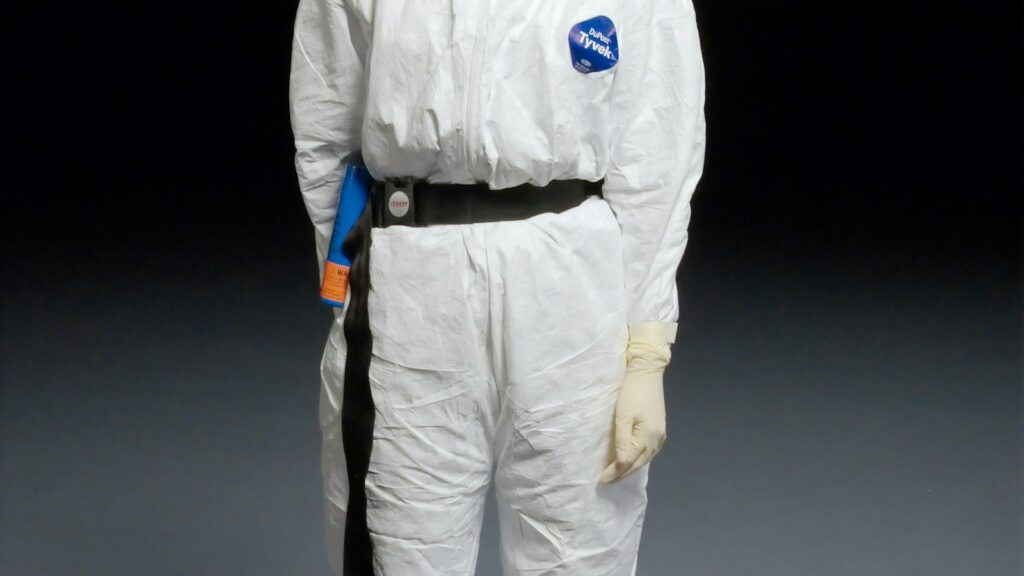
- Full PPE including respiratory protection, Tyvek suits, and gloves
rated for biological material - Clinical disinfectants with documented antimicrobial efficacy
- Appropriate waste disposal — contaminated material is classified
waste under the Environmental Protection Act 1990
The housing association or social landlord is responsible for
commissioning this clean. A bereavement support officer may handle
next-of-kin contact, but the property decontamination is the landlord’s
obligation, not something that can be left to relatives or contractors
not equipped to handle it.
2. Severe Hoarding
Hoarding situations range from manageable — a property with
accumulated clutter that requires a deep clean and declutter — to
extreme, where years of accumulated waste have created structural
hazards, pest infestation, and conditions that make the property
uninhabitable without specialist intervention.
For severe hoarding situations in social housing:
- The initial assessment needs to establish whether the property can
be addressed by a standard cleaning team (with waste removal) or
requires a specialist contractor - Properties with evidence of rodent infestation throughout,
decomposing organic material, or accumulated sharps and similar hazards
require specialist handling - Waste removal from severe hoarding situations may involve multiple
skips and, for hazardous material, licensed waste disposal
Housing associations that handle this through standard cleaning teams
— because it’s cheaper or faster — risk exposing their staff or
contractors to health hazards and may face questions about duty of
care.
3. Drug
Contamination and Bodily Fluid Contamination
Properties used for drug use, or those with significant bodily fluid
contamination, require specific decontamination protocols. This
includes:
- Properties where drug use paraphernalia (sharps, burned surfaces,
chemical residue) is present throughout - Properties with bloodborne pathogen exposure risk
- Properties where significant contamination has occurred from neglect
or specific incidents
Again, standard cleaning protocols and standard cleaning products are
not appropriate. Specialist contractors use EPA-registered disinfectants
with documented efficacy against specific pathogens, and handle and
dispose of contaminated waste according to relevant regulations.
What a Specialist
Biohazard Clean Involves
A professional biohazard void clean for housing associations
includes:
Initial assessment and scope confirmation: Before
work begins, the property is assessed to determine the extent of
contamination and the appropriate decontamination protocol.
Contaminated material removal and disposal:
Biological material, contaminated soft furnishings, and other affected
items are removed and disposed of according to the relevant waste
regulations. This is not the same as skip hire — contaminated material
must be handled as clinical or hazardous waste depending on the
category.
Surface decontamination: All contaminated surfaces
are treated with appropriate clinical disinfectants and protocols. The
standard for biohazard cleaning is not “clean” in the domestic sense —
it is “decontaminated to a demonstrably safe standard.”
Odour treatment: Biological decomposition and
contamination produce odour that penetrates porous materials. Specialist
deodorising treatment — including ozone treatment in severe cases — is
part of the decontamination scope.
Decontamination certificate: At completion, the
contractor provides a decontamination certificate documenting what was
done, the products and protocols used, and confirming the property has
been brought to a safe standard. This is the documentation the housing
association needs for its records.
Biohazard vs Standard Void Clean: Key Differences
What distinguishes specialist cleaning from standard void/restoration
cleaning
| Element | Standard Void Clean | Biohazard Clean |
|---|---|---|
| PPE required | Standard cleaning gloves and apron | Full Tyvek suit, respiratory protection, biohazard-rated gloves |
| Products used | Commercial degreasers and sanitisers | Clinical disinfectants with documented antimicrobial efficacy |
| Waste disposal | Standard waste removal / skip | Licensed clinical or hazardous waste disposal |
| Documentation | Completion report with scope and date |
Decontamination certificate with protocol, products, and compliance confirmation |
| Re-occupation | Property ready to re-let after clean | Property safe to occupy only after decontamination confirmed |
Who Is
Responsible for Commissioning the Clean
The housing association or registered social landlord is responsible
for commissioning a biohazard clean of a void property. This is a
property management obligation — it is not transferable to next of kin
(who may not be identifiable), the local authority, or the police (who
will have secured and left the scene, not cleaned it).
In practice, the commissioning route is typically:
- Void property team or estate services
manager identifies the situation and initiates contact with the
specialist contractor - Housing officer manages communication with any next
of kin if relevant - Contractor carries out the clean and issues a
decontamination certificate - Documentation filed with the void property records
and the health and safety file
For housing associations with a portfolio of properties across
Greater Manchester, a pre-arranged relationship with a contractor who
handles both standard void cleans and biohazard situations avoids the
operational difficulty of finding a specialist at short notice when a
situation arises.

Documentation and
Insurance Implications
A properly documented biohazard clean is important for two reasons
beyond the immediate void management:
Insurance: A property that has been subject to a
contamination event and then re-let without documented decontamination
is a liability risk. If a subsequent tenant or visitor to the property
experiences a health issue, the housing association’s position depends
partly on whether it can demonstrate the property was properly
decontaminated before re-let. A decontamination certificate is that
evidence.
Health and safety obligations: Housing associations
have duties under the Health and Safety at Work Act 1974 and associated
regulations. Allowing staff, contractors, or tenants access to a
property with known biohazard conditions that haven’t been addressed is
a potential breach of these duties.
For housing associations managing communal areas and HMO-style shared
housing, the obligations extend to those areas too. See our HMO cleaning compliance
guide for the legal framework that applies to shared housing.
Frequently Asked Questions
Can a standard cleaning company handle a biohazard
situation?
No — not safely. Standard cleaning companies are not equipped with
the PPE, the clinical disinfectants, or the waste disposal processes
needed for biohazard decontamination. Instructing a standard cleaner for
a biohazard situation exposes the cleaner to health risks and may not
produce a property that is actually safe to re-occupy.
How quickly can a biohazard clean be completed?
An initial assessment can typically be arranged within 24 hours for
urgent situations. The timeline for the clean itself depends on the
extent of contamination — a single-room situation may be resolved in one
day; a whole-property hoarding or decomposition situation may take 2–3
days.
Does the housing association need to notify anyone before
commissioning a biohazard clean?
For properties involving an unattended death, the clean should only
begin after the police have released the scene. The coroner’s office
handles post-mortem investigation; the cleaning contractor works with
the police scenes of crime process. The housing association’s void team
should confirm scene release before scheduling the clean.
What happens to the tenant’s belongings in a biohazard
situation?
This depends on the situation and any relevant next-of-kin
arrangements. In many cases, contaminated soft furnishings and similar
items are disposed of as part of the decontamination. The housing
association’s void management procedure should address this, ideally in
a policy document that also covers tenant estate situations.
Related reading: Void
Period Cleaning: What Property Managers Need to Know | HMO Cleaning:
Compliance and What’s Required | How
to Choose a Cleaning Company for Your Property Portfolio
Need a specialist void or biohazard clean for social housing in
Manchester? Get a free quote
from Atlon Cleaning Services or call 0161
524 9966. We cover Greater Manchester and the wider North West.