
Letting agents managing residential blocks and houses in multiple
occupation (HMOs) across Manchester have a specific operational
challenge that single-property managers don’t face: the communal areas.
Staircases, entrance lobbies, bin stores, lifts, and shared external
paths sit outside any individual tenancy, which means the cleaning
obligation falls — and stays — with the managing party.
Getting this right matters on two levels. Practically, clean communal
areas reduce tenant complaints and support re-let presentations.
Legally, for licensed HMOs, communal area maintenance is a compliance
requirement that Manchester City Council inspects actively and can take
enforcement action over.
Key Takeaways – Communal area cleaning obligations
apply to both HMOs (under the Management of HMOs Regulations 2006) and
blocks of flats (under service charge and managing agent duties) –
Manchester City Council inspects licensed HMOs specifically for communal
area condition — dirty or obstructed shared spaces are a primary trigger
for enforcement action – A professional communal cleaning contract with
dated service records is the most practical way to demonstrate
compliance and manage tenant expectations – Frequency varies by property
type: standard blocks need fortnightly to monthly visits; high-occupancy
HMOs or properties with shared kitchens and bathrooms need weekly
professional cleaning – One contractor handling both communal cleans and
void/checkout cleans across a portfolio simplifies scheduling and
reduces management overhead significantly
What Counts as a Communal
Area
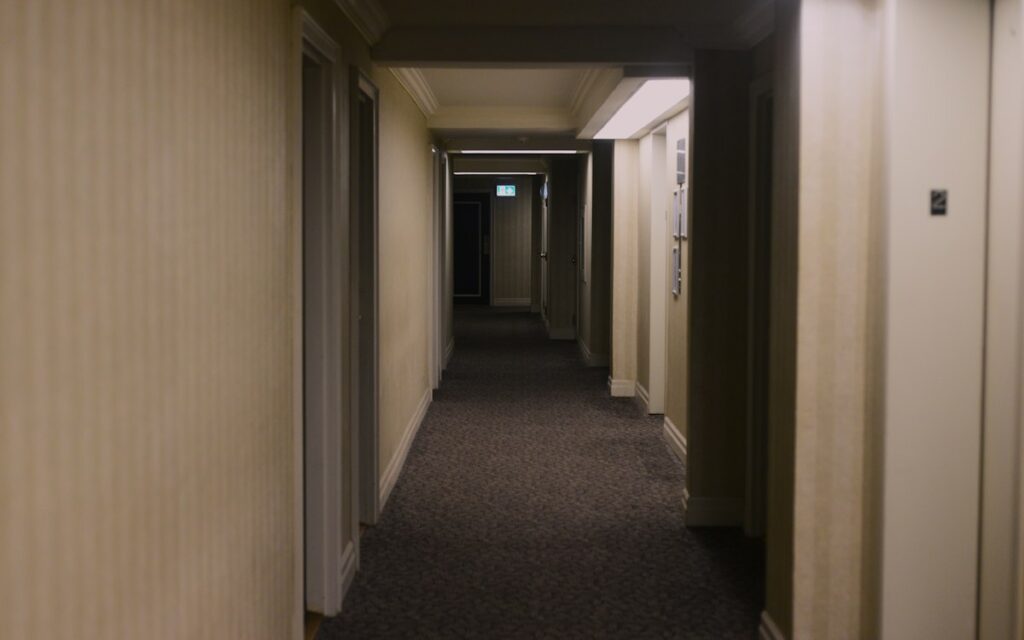
For letting agents managing either HMO-type properties or blocks of
flats, communal areas include everything that falls outside an
individual tenancy:
Internal communal spaces: – Entrance lobbies and
reception areas – Stairwells and landings – Corridors and hallways –
Lifts and lift lobbies – Shared bathrooms or kitchens (in HMOs with
shared facilities) – Laundry rooms or utility rooms
External communal spaces: – Bin stores and recycling
areas – Car parks or parking bays – Shared garden areas and pathways –
External steps and entrance areas
The coverage matters because council inspectors and managing agents
cannot simply inspect the visible corridor and call it done — bin
stores, for instance, are among the most frequently cited issues in
Manchester HMO inspections, and external paths are relevant to safety
and presentation in block management.
The Legal
Obligation Differs by Property Type
HMOs
For licensed HMOs in Manchester, Section 7 of the Management of
Houses in Multiple Occupation (England) Regulations 2006 requires the
manager to ensure common parts are maintained in good and clean repair
and kept reasonably clear from obstruction. This applies regardless of
what the tenancy agreement says about tenant cleaning responsibilities.
If Manchester City Council inspects an HMO and finds communal areas
dirty or obstructed, enforcement action is taken against the manager —
not the tenants.
For a detailed breakdown of the HMO-specific legal framework,
including what Manchester council inspectors look for and how the
licence renewal process is affected by communal area condition, see our
HMO cleaning
compliance guide.
Blocks of Flats
For residential blocks, the obligation sits with the freeholder or
their appointed managing agent. Communal area maintenance is typically
funded through service charges paid by leaseholders, and the managing
agent has a duty to maintain common parts to a reasonable standard. RICS
guidance on service charge management makes clear that communal cleaning
is a core component of the service charge budget.
In practice, the key difference is accountability: in an HMO, the
landlord is directly liable if communal areas fall short. In a block,
the managing agent owes duties to leaseholders, and persistent poor
communal maintenance can generate service charge disputes or formal
complaints through the First-tier Tribunal (Property Chamber).
Frequency
Recommendations by Property Type
The right cleaning frequency depends on occupancy, shared facilities,
and the type of property. These are practical working guidelines rather
than regulatory minimums:
Communal Cleaning Frequency Guide for Manchester Letting Agents
Indicative frequencies based on property type and occupancy
| Property Type | Recommended Frequency | Key Areas to Prioritise |
|---|---|---|
| HMO 4–6 occupants (shared bathroom) | Weekly | Shared bathrooms, corridors, bin store |
| HMO 4–6 occupants (en-suite rooms) | Fortnightly | Stairwell, corridor, hallway, bin store |
| Block of flats, 6–12 units | Fortnightly to monthly | Lobby, stairwell, bin store, external entrance |
| Block of flats, 12+ units or with lift | Weekly to fortnightly | Lift interior, lobby, all landings, bin store |
| Purpose-built HMO (student/professional) | Weekly minimum | All areas including shared kitchen if present |
| External communal areas (all types) | Monthly or seasonal | Paths, car park, garden, external bin area |
and typical occupancy
What a Professional
Communal Clean Covers
A professional communal clean for a residential block or HMO in
Manchester typically includes:
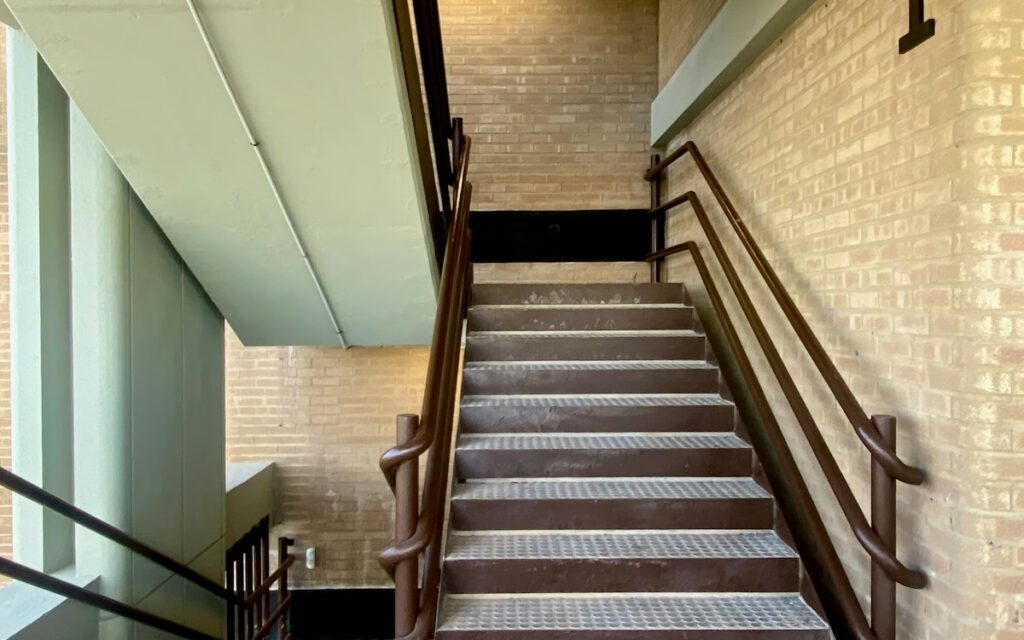
Stairwells and corridors: – Sweeping and mopping
hard floors on all landings and in corridors – Wiping down handrails,
skirting boards, and door frames – Cleaning light switches and communal
door handles – Removing any debris, leaflets, or waste left in common
areas
Entrance lobby: – Floor cleaning (mopping or
vacuuming depending on surface) – Letter box area, parcel shelf, and
intercom panel cleaned – Entry door glass cleaned on both sides –
Doormats hoovered or replaced as needed
Lifts (where present): – Interior floor and walls
cleaned – Control panel and buttons wiped down – Lift door tracks
cleared of debris
Bin stores: – Internal surfaces swept and wiped down
– Spillage or waste accumulation cleared – Area checked for pest
evidence
External communal areas: – Paths and entrance steps
swept – Car park areas cleared of litter – Seasonal debris (leaves, mud)
removed from shared paths
Setting Up a Communal
Cleaning Contract
For letting agents managing multiple properties across Greater
Manchester, a standing communal cleaning contract with a single
contractor offers practical and documentary advantages over ad-hoc
booking.
Step 1: Assess the scope before setting a
frequency
Walk each property and note: how many floors, whether there’s a lift,
what shared facilities exist, whether the bin store is internal or
external, and what the current cleaning standard is. This produces an
accurate scope, not a generic quote.
Step 2: Define the frequency and service
standard
Based on the assessment, set the visit frequency and the expected
standard for each area. For HMO compliance purposes, the standard is
functional and documented: surfaces clean, no obstruction, no waste
accumulation. For higher-end blocks, the standard may also include
window cleaning on lobby glazing or specialist floor treatment.
Step 3: Get dated service records from every
visit
Every professional cleaning visit should produce a dated service
record — a log showing when the clean was carried out and what was
covered. For HMOs, this is evidence for Manchester council compliance
inspections. For blocks, it is evidence in any service charge dispute. A
contractor who does not provide dated records is not suitable for
managed portfolio work.
Step 4: Brief tenants on communal expectations
In an HMO especially, tenants need to understand that communal
cleaning is managed professionally, but that they remain responsible for
not accumulating waste in shared spaces or obstructing hallways. A short
written note at the start of a tenancy sets this expectation clearly and
reduces the friction that comes when communal standards slip between
cleaning visits.
Documentation
for Compliance and Leaseholder Transparency
For HMOs, dated service records provide documented evidence of
compliance when Manchester City Council carries out a property
inspection. An inspector who asks when communal areas were last cleaned
and receives a folder of signed service logs has a very different
interaction from one who receives a vague answer.

For blocks of flats, the service records support transparency with
leaseholders. Service charge funds are held on trust for leaseholders,
and leaseholders are entitled to see evidence of services delivered. A
communal cleaning contract with dated records can be shared in an annual
service charge statement with minimal administration.
For a practical guide to selecting and evaluating cleaning
contractors for portfolio work — including what questions to ask and
what documentation to require — see our guide
to choosing a cleaning company for property managers.
Frequently Asked Questions
Can we include communal cleaning in the tenancy agreement and
make tenants responsible?
For HMOs: the legal obligation under the Management of HMOs
Regulations 2006 rests with the manager regardless of what the tenancy
agreement says. You can delegate the task, but if standards fall short
and the council inspects, the manager is liable. For blocks:
leaseholders pay for communal services via service charge; individual
tenants are not typically party to communal cleaning obligations. The
practical answer for most managed portfolios is professional cleaning,
not tenant delegation.
How much does communal area cleaning cost for a Manchester
HMO?
A typical Manchester terraced HMO with 4–6 occupants, one stairwell,
and a bin store: fortnightly professional cleaning is usually in the
range of £40–£80 per visit depending on property size and scope. Larger
blocks with lifts, multiple floors, and bin stores will cost more.
Assessment-based pricing from the contractor is more reliable than
flat-rate quotes.
How often should bin stores be cleaned
specifically?
Bin stores need a weekly check and a full clean at least monthly. In
practice, the risk of pest attraction and odour from bin stores means
they should be assessed at every communal cleaning visit, with a deeper
clean scheduled monthly. Bin stores that are never cleaned are one of
Manchester council’s most commonly cited HMO inspection failures.
What happens if a communal area gets a one-off problem
between scheduled visits — a spill, pest sighting, or
fly-tipping?
A good contractor relationship includes the ability to book
additional visits at short notice for reactive issues. For properties
with higher incident risk — large blocks, properties near commercial
areas, bin stores with pest history — a standing arrangement for
same-week reactive visits is worth building into the contract.
Do communal area cleans need to be carried out by a
specialist, or can the same contractor who does void cleans handle
this?
Communal area cleaning does not typically require specialist
equipment — it is professional cleaning applied to shared spaces rather
than a single property. A contractor who handles void cleans and end of
tenancy work for your portfolio can usually handle communal cleaning
too, which simplifies contractor management significantly.
Related reading: HMO Cleaning:
Compliance and What’s Required in Manchester | How
to Choose a Cleaning Company for Your Property Portfolio | Void
Period Cleaning: What Property Managers Need to Know
Need a communal cleaning contract for your Manchester residential
block or HMO portfolio? Get a
free quote from Atlon Cleaning Services or call 0161 524 9966. We cover Greater Manchester
and the wider North West.