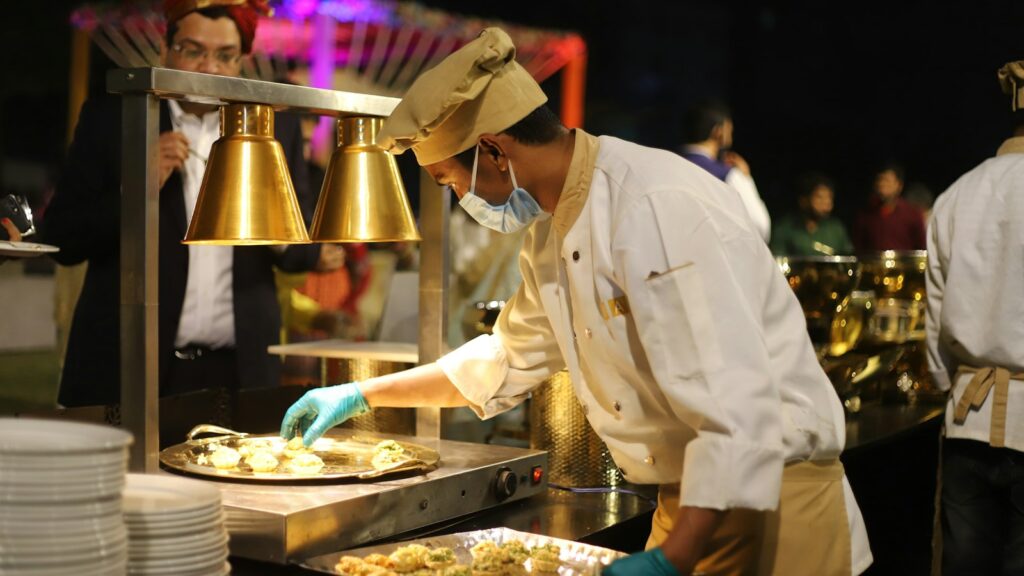
Hotel kitchens are among the most complex food service environments
to clean and maintain. A mid-size hotel in Manchester might operate a
restaurant kitchen, a room service production area, a banqueting kitchen
serving private events, and a breakfast kitchen — each with different
equipment, different operating hours, and different levels of use
throughout the year.
Each of these is a food premises for EHO inspection purposes. Each is
subject to the Food Hygiene Rating Scheme. Each requires its own
cleaning schedule and HACCP documentation.
Key Takeaways – Each hotel kitchen outlet
(restaurant, room service, banqueting, breakfast) is a separate food
premises for EHO and HACCP purposes — each needs its own cleaning
documentation – UK hospitality industry guidance updated in 2025
recommends a formal Hygiene Management Plan (HMP) for hotel food
operations, consolidating cleaning, allergen, temperature, and supplier
controls – Seasonal peaks — Christmas functions, conference season, and
summer events — create periods of higher grease load that may require
additional deep clean frequency – Hotel banqueting kitchens that are
idle for extended periods need a deep clean before and after each active
season – North West hotel kitchens fall under local authority EHO
inspection — Manchester, Salford, Trafford, and other councils
administer FHRS inspections within their areas
Why Hotel
Kitchens Are a Different Cleaning Challenge
Multiple Outlets,
Multiple Compliance Points
A full-service hotel doesn’t have one kitchen — it has several. The
specific configuration varies by property, but a typical mid-size North
West hotel might include:
- Main restaurant kitchen: Full cooking line,
multiple fryers, combi ovens, grill station, and a substantial canopy
system - Banqueting kitchen: Used intermittently for events,
often with dedicated equipment for large-scale service - Room service area: Smaller production area,
sometimes operating 24 hours, with different equipment to the main
kitchen - Breakfast kitchen: Often separately laid out, with
high-volume toasters, hot plates, egg stations, and a focus on rapid
service
Each of these is a distinct food preparation area. For HACCP
purposes, each needs its own cleaning schedule. An EHO inspector
assessing a hotel may inspect any or all of these areas, and the rating
reflects the weakest-performing area inspected.
Seasonal Peaks
Change the Cleaning Requirement
Hotel kitchen use is rarely consistent year-round. Manchester and the
North West experience clear seasonal peaks:
- Christmas and New Year: The highest-intensity
period for most hotel food operations, with large-scale function
catering, extended restaurant hours, and room service operating at peak
volume simultaneously - Conference season (typically September–November and
January–March): Large conference and meeting hotel properties see
significant banqueting kitchen use during this period - Summer events and weddings: Summer wedding season
and outdoor events create high banqueting kitchen demand
The seasonal peak problem for cleaning is twofold. First, the period
of heaviest use is when it’s hardest to schedule a deep clean — the
kitchen is running hard and there’s minimal downtime. Second, the period
immediately after peak season, when grease accumulation is at its
highest, is when operators often don’t think about cleaning because the
busy period has just ended.
A deep clean scheduled for January — after the Christmas peak — and
one scheduled before the Christmas season begins (typically October or
November) is a practical approach for hotel restaurants and banqueting
kitchens.
Banqueting
Kitchens: The Idle Period Problem
Banqueting kitchens present a specific cleaning challenge related to
periods of non-use. A kitchen that is not in operation for two to four
months and then opens for the Christmas function season without a
pre-season deep clean starts with accumulated residue from the previous
season — and risks EHO scrutiny if inspected during or just after that
period.
For hotel banqueting kitchens with significant idle periods, the
cleaning schedule should include: – A deep clean at the end of the
active season, before the kitchen is closed – An inspection and, if
needed, a further clean before reopening
The pre-season clean also reduces pest risk. A kitchen that has been
idle for months and accumulates moisture, residual grease, and food
debris in drainage and floor edges is more vulnerable to pest
establishment during the closed period.
The Hygiene Management
Plan Requirement
UK hospitality industry guidance updated in 2025 moved toward
recommending a formal Hygiene Management Plan (HMP) for hotel food
operations. An HMP consolidates what previously existed as separate
HACCP, allergen management, temperature monitoring, and supplier control
records into a single documented system.
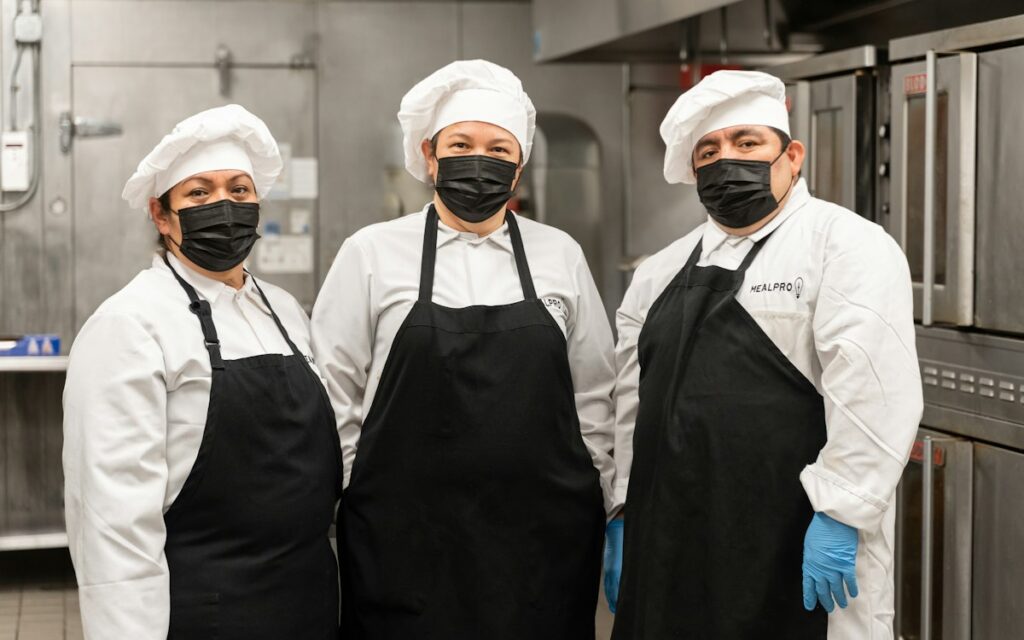
For hotel food safety managers and head chefs, the HMP typically
covers:
- HACCP-based cleaning schedules for each kitchen outlet
- Temperature monitoring records for all refrigeration and cooking
equipment - Allergen management procedures and documentation
- Supplier and delivery acceptance records
- Staff training and competency records
- Pest control contractor records
The cleaning schedule element of the HMP should document: – What is
cleaned in each kitchen area – Frequency (daily, weekly, and deep clean
intervals) – Products used (with COSHH data sheets) – Responsibility
(which staff role is responsible for each task) – Completion records
with dated sign-off
An EHO inspecting a hotel food operation will look at the HMP or
equivalent documentation as part of the food safety management
assessment.
Recommended Deep Clean Schedule for North West Hotel Kitchens
Source: UK food safety industry guidance; EHO inspection practice
| Kitchen Outlet | Usage Pattern | Recommended Deep Clean Interval |
|---|---|---|
| Main restaurant kitchen | Daily, full service | Every 3 months |
| Room service area | Daily or 24-hour | Every 3–4 months |
| Banqueting kitchen (seasonal) | Intermittent — events-based | Before and after each active season |
| Breakfast kitchen | Daily, morning service | Every 4–6 months |
| Pool/spa kitchen (if applicable) | Variable | Every 6 months minimum |
2025–2026
What a Hotel Kitchen
Deep Clean Covers
The scope of a professional hotel kitchen deep clean follows the same
principles as a standard commercial kitchen deep clean — but across
multiple areas and with greater complexity.
For each kitchen outlet, the deep clean covers:
- Extraction canopy surfaces, baffles, and grease filters (not
internal TR19 ductwork — see note below) - Cooking equipment: ovens, ranges, fryers, grills, griddles
- Floor scrubbing including edges and drain channels
- Wall surfaces, backsplash, and splashback panels
- Work surfaces, shelving, and prep areas
- Sinks and drainage
- Cold store exteriors
TR19 scope note: As with all commercial kitchen deep
cleans, Atlon’s service covers canopy surfaces, baffles, and grease
filters. Internal ductwork cleaning under TR19 guidelines is a separate
specialist service. Hotel properties requiring TR19 compliance should
engage a TR19-certified contractor for the internal ductwork
element.
For larger hotel properties, the deep clean may be structured across
multiple nights — one night per kitchen outlet — to allow each area to
be cleaned without disrupting the others. This is the most practical
approach for full-service hotels where the restaurant kitchen, room
service, and banqueting kitchen are distinct spaces.
EHO Inspections for
Hotels: What to Expect
EHO inspectors can visit any food premises, including hotels, at any
time during operating hours. For hotel food operations, the inspection
may cover one or multiple kitchen areas depending on what the inspector
observed or what was triggered by a complaint or programme
inspection.
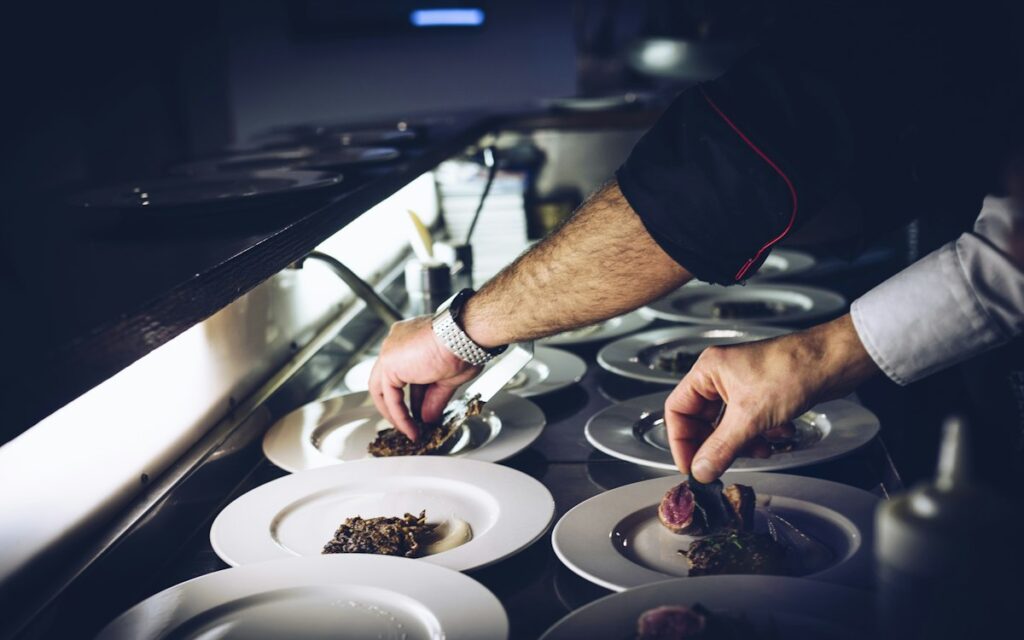
The same three assessment areas apply: 1. Hygienic food
handling: Temperature control, cross-contamination practices,
storage 2. Condition of premises: Cleanliness of all
kitchen areas inspected 3. Food safety management:
Documentation, HACCP records, cleaning schedules
For the full EHO inspection checklist, see our EHO
inspection guide for Manchester kitchens.
A hotel property with multiple kitchen areas should maintain separate
cleaning records for each area. If an inspector visits and the
banqueting kitchen records are filed with the main kitchen documentation
but not clearly attributed to the banqueting area, this creates
confusion and can be treated as a documentation gap.
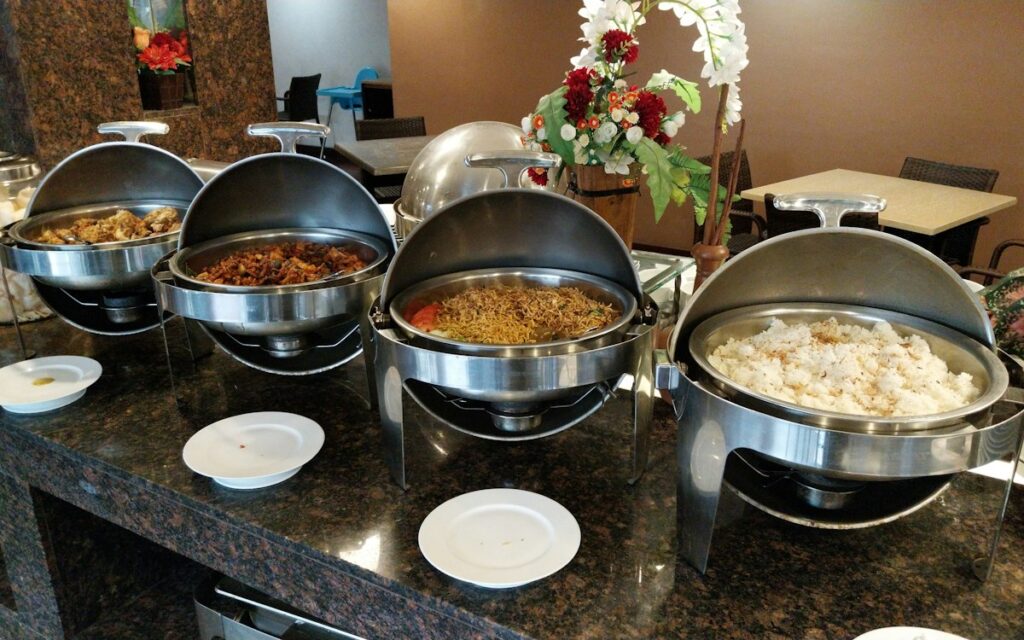
Coordinating a Hotel
Kitchen Deep Clean
For food and beverage managers and executive chefs in North West
hotels, the practical coordination of a hotel-wide deep clean
involves:
- Scheduling against the events calendar: Identify
periods between large events or off-peak weeks where kitchen areas can
be taken offline. Christmas is the worst time to schedule a deep clean —
plan before and after. - Communicating with the cleaning contractor: Provide
a full list of kitchen areas, equipment, and access requirements in
advance. For multi-area hotels, a pre-visit assessment may be
needed. - Isolating equipment safely: Gas and electrical
equipment isolation before cleaning is a safety requirement. Confirm who
is responsible for this step. - Filing the completion report: Each area’s deep
clean should generate a dated completion report that goes into the HMP
or HACCP file for that kitchen.
Frequently Asked Questions
Does a hotel need a separate food hygiene rating for each
kitchen?
The FHRS rating is issued at the premises level — typically the hotel
as a whole. However, an EHO inspector may inspect any food preparation
area within the premises. A poor condition finding in one kitchen area
can affect the overall rating.
How do I find a cleaning contractor who can handle a
multi-area hotel kitchen?
Ask specifically about experience with hotel properties and
multi-outlet scheduling. A contractor who handles only single-kitchen
restaurants may not have the coordination experience needed for a hotel
with three or four distinct kitchen areas.
Can deep cleans be scheduled around the hotel’s events
calendar?
Yes, and they should be. Atlon Cleaning Services works around
operator schedules and can plan hotel kitchen deep cleans to coincide
with lower-volume periods or planned closures.
How long does a full hotel kitchen deep clean
take?
A mid-size hotel with a restaurant kitchen, room service area, and
banqueting kitchen typically requires two to three overnight sessions. A
larger property with more kitchen outlets may take longer and is best
assessed in person before quoting.
Related reading: What Is
a Commercial Kitchen Deep Clean and What Does It Include? | EHO
Inspection Checklist for Manchester Kitchens | How
Often Should a Commercial Kitchen Be Deep Cleaned? | HACCP
Cleaning Schedules for Commercial Kitchens
Need a commercial kitchen deep clean for your North West hotel? Get a
free quote from Atlon Cleaning Services or call 0161 524 9966. We cover Greater Manchester,
Salford, Trafford, and the wider North West.