Your office desk harbours roughly 21,000 germs per square inch – that’s 400 times more bacteria than the average toilet seat (University of Arizona). Most offices look clean. But “looks clean” and “is clean” aren’t the same thing.
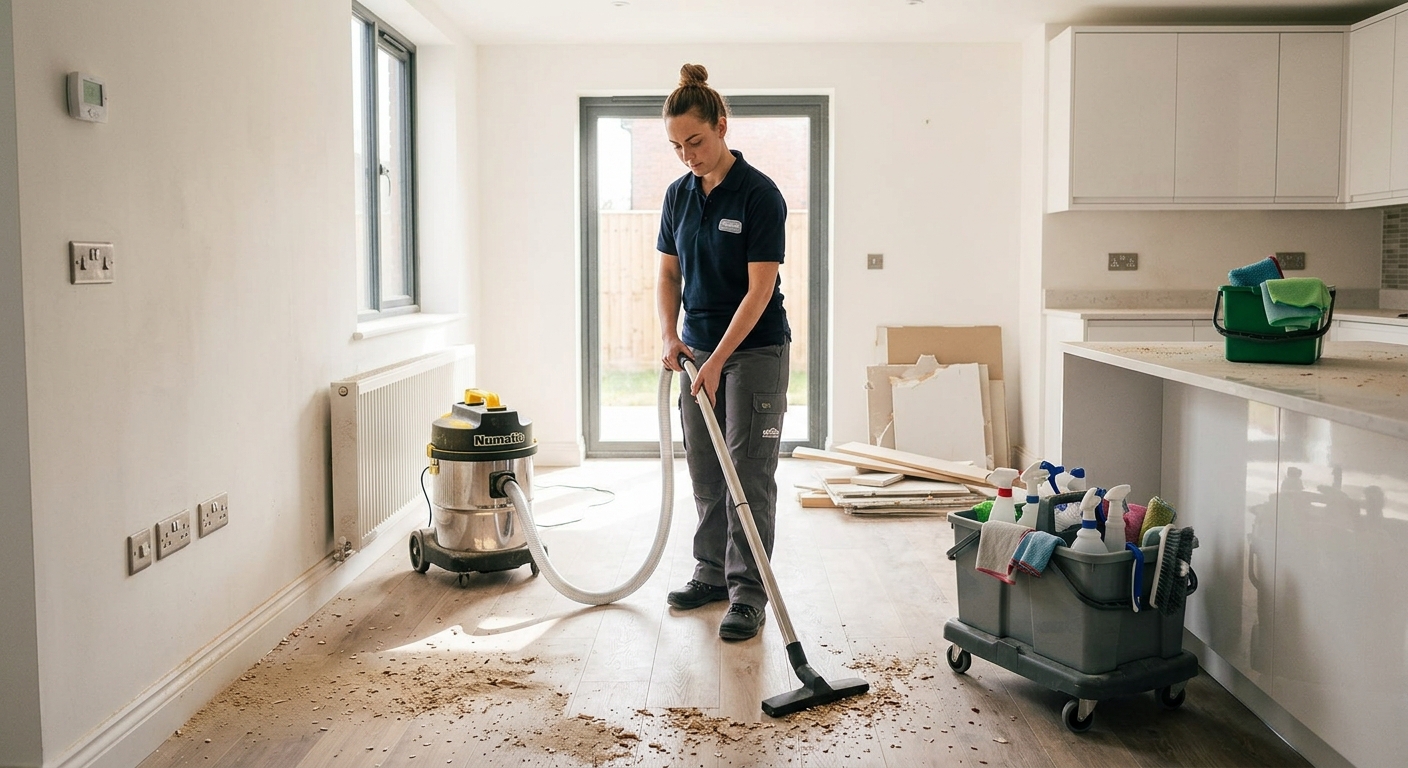
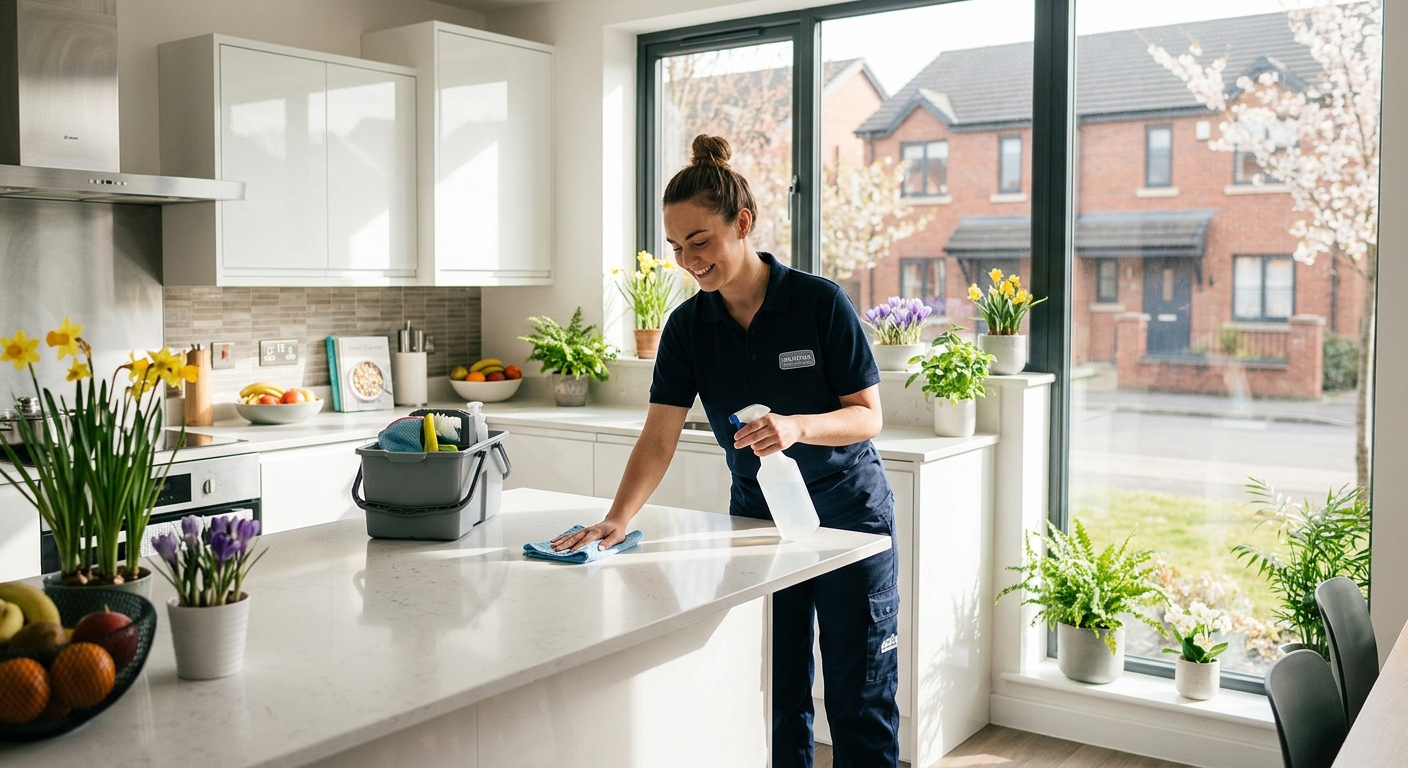
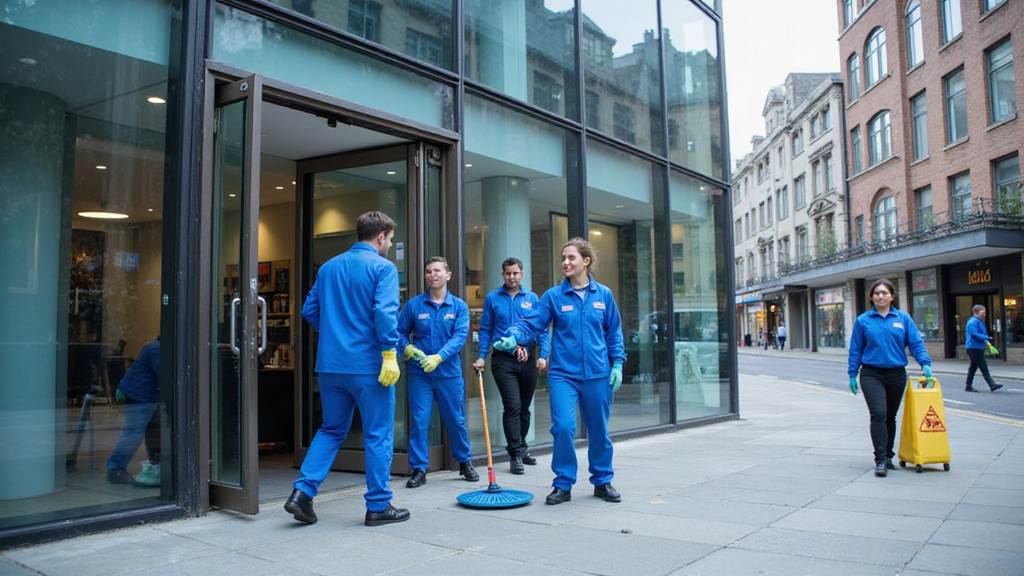
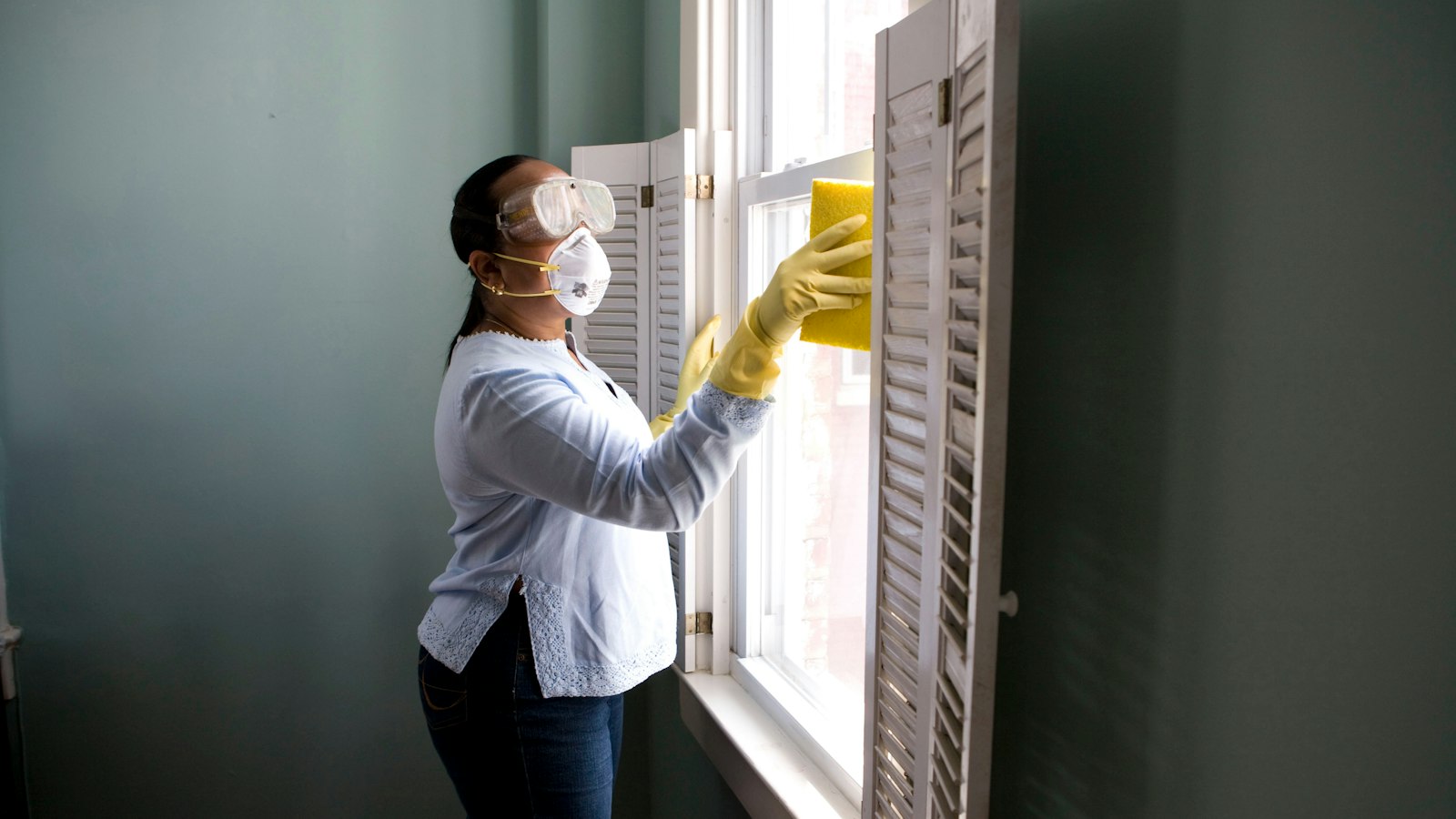
We’ve cleaned hundreds of Manchester offices over the years. The ones that stay consistently healthy and presentable share one trait: they follow a structured cleaning checklist. Not a vague “tidy up after hours” arrangement, but a room-by-room, task-by-task schedule that covers daily, weekly, and monthly jobs.
This is the checklist we use. Print it, hand it to your cleaning team, and you’ll notice the difference within a fortnight.
Free download
Our Office Cleaning Checklist
The same daily, weekly and monthly checklist our team uses in Manchester offices. Free to download, print and hand to your cleaners.
TL;DR: A structured office cleaning checklist splits tasks across daily (desks, bins, toilets), weekly (blinds, handles, kitchen deep wipe), and monthly (carpets, vents, upholstery) schedules. ISSA research found 88% of employees say an unclean workspace hurts their concentration (ISSA). For Manchester offices, professional cleaning runs £20-£30/hr. This checklist covers every room and task your cleaners should tackle.
The checklist at a glance
☑ Daily
- Vacuum and mop floors, empty all bins
- Wipe kitchen worktops, sink and appliances
- Clean and disinfect toilets and sinks
☑ Weekly
- Disinfect keyboards, mice and phones
- Dust windowsills and skirting boards
- Wipe light switches and door handles
☑ Monthly
- Deep clean floors and carpets
- Clean furniture and upholstery
- Check vents, air quality and equipment
Why Does Your Manchester Office Need a Cleaning Checklist?
ISSA research shows 88% of employees report that an unclean workspace hinders their concentration and productivity (ISSA). A checklist isn’t about being fastidious. It’s about making sure nothing gets missed – because in our experience, the things that get missed are the things that make people ill.
Without a checklist, cleaners default to the visible stuff: hoovering the carpet, emptying the bins, giving the toilets a once-over. That’s fine for appearances. But the door handles everyone touches 20 times a day? The phone handsets pressed against faces? The keyboard that hasn’t been wiped since last Christmas? Those are where germs actually live.
Our finding: After introducing structured checklists for our Manchester office clients, we’ve seen complaint rates about cleanliness drop by over 70% in the first quarter. The difference isn’t cleaning harder – it’s cleaning more consistently.
A printed checklist also protects you if there’s ever a dispute. Your cleaner signs off each task, you have a paper trail, and nobody’s arguing about whether the kitchen was done last Thursday.
office cleaning costs breakdown
What Should Your Daily Office Cleaning Tasks Include?
Daily cleaning covers the tasks that can’t wait. These are the surfaces and areas that accumulate dirt, bacteria, and mess within a single working day. According to research, bacteria levels on office surfaces increase 19-31% throughout a typical workday if left unwiped (University of Arizona).
General office areas
- Vacuum all carpeted areas and mop hard floors
- Empty bins and replace liners (every bin, not just the obvious ones)
- Dust desks and accessible work surfaces with a damp microfibre cloth
- Wipe high-touch points: door handles, light switches, lift buttons, handrails
- Spot-clean marks on glass partitions and internal doors
- Straighten reception and communal seating areas
Kitchen and breakroom
- Wipe down all worktops, splashbacks, and the dining table
- Clean the sink and taps (descale weekly)
- Wipe exterior of microwave, kettle, fridge, and coffee machine
- Empty the fridge of any out-of-date food (Fridays work best)
- Mop the floor – kitchens get sticky fast
Toilets and washrooms
- Clean and disinfect all toilets, urinals, and sinks
- Replenish soap, paper towels, and toilet rolls
- Wipe mirrors and any shelving
- Mop floors with a disinfectant solution
- Check sanitary bins and replace if needed
From our team: The single most common daily task that gets rushed is toilet floor mopping. Cleaners spray and wipe the bowl, but the floor around the base is where bacteria pool. We’ve made it a sign-off item on every daily checklist we issue.
What Goes on Your Weekly Cleaning Checklist?
Weekly tasks target the areas that build up grime over 5-7 days but don’t need daily attention. UK sickness absence cost employers approximately £103 billion in 2023 – up £30 billion since 2018 (IPPR). Weekly deep-wiping of high-touch surfaces is your first line of defence against preventable illness spreading through the office.
Desks and workstations
- Disinfect keyboards, mice, and phone handsets (25,000 germs per square inch on the average office phone – University of Arizona)
- Wipe monitor screens with an appropriate screen cleaner
- Dust desk lamps, cable management trays, and under-desk areas
- Clean chair armrests – these are touched constantly but rarely wiped
Communal and meeting areas
- Dust windowsills, skirting boards, and picture frames
- Wipe all light switches and door handles with antibacterial solution
- Clean internal glass partitions and mirrors
- Dust blinds or curtains (a damp cloth works, don’t just flick)
- Wipe shared printers, scanners, and copier screens
Kitchen deep wipe
- Clean inside the microwave (food splatters harbour bacteria within hours)
- Wipe fridge shelves and check for spills
- Descale kettle and taps
- Clean toaster tray and any other appliance interiors
- Scrub the sink drain – biofilm builds up quickly
Washroom extras
- Descale taps and shower heads (if applicable)
- Scrub grout on tiled surfaces
- Check and clean ventilation grilles
- Deep-clean sanitary disposal units
deep clean vs maintenance clean comparison
What Monthly Cleaning Tasks Keep Your Office in Top Shape?
Monthly tasks go beyond surface-level maintenance. They’re the jobs that prevent gradual build-up from becoming a problem. CIPD’s 2024 Health and Wellbeing at Work report found UK employees averaged 7.8 sick days per year – and minor illnesses (colds, flu, stomach bugs) were the top cause (CIPD, 2024). Monthly cleaning tackles the hidden reservoirs where these bugs breed.
Floors and carpets
- Spot-treat carpet stains and high-traffic wear areas
- Machine-scrub hard floors (not just mop – use a rotary or scrubber-drier)
- Check carpet edges and under furniture for trapped dust and debris
- Polish reception floors and entrance areas for a professional first impression
Furniture and upholstery
- Steam-clean office chairs and fabric seating
- Wipe down bookshelves, filing cabinets, and storage cupboards (inside and out)
- Clean behind and under furniture – desks, sofas, planters
- Check for cobwebs in corners, around ceiling lights, and above tall furniture
Air quality and ventilation
- Clean air conditioning vents and grilles (dust blocks airflow and spreads allergens)
- Wipe ceiling fan blades if applicable
- Check extractor fans in kitchens and toilets
- Replace air fresheners or diffusers
Technology and equipment
- Deep-clean all keyboards and mice (remove and shake out, then disinfect)
- Wipe monitor screens and stands
- Clean printer interiors and paper trays
- Dust server rooms or comms cupboards (with appropriate care)
Which Areas Do Cleaners Miss Most Often?
Men’s desks carry three to four times more bacteria than women’s, according to University of Arizona research (University of Arizona). But the real culprits aren’t the desks themselves – they’re the spots that don’t make it onto a basic cleaning brief.
Here are the areas we find most often neglected when we take over from a previous cleaning provider:
The top 10 most-missed spots
- Underneath desks – dust bunnies, crumbs, and cable tangles
- Chair armrests and adjustment levers – touched daily, cleaned never
- Light switches and lift buttons – everyone touches them, nobody wipes them
- Phone handsets (desk phones and conference units)
- Printer touch screens and paper tray handles
- Tops of cabinets and shelving units – out of sight, out of mind
- Skirting boards – they collect a grey film of dust within days
- Behind toilets – the base and pipework at the back
- Kitchen drawer handles and cupboard fronts
- Inside bins – liners get swapped, but the bin itself doesn’t get wiped
Our finding: When we take over a new office contract in Manchester, we run a “missed spots” audit on day one. On average, we identify 8-12 areas the previous cleaner wasn’t touching at all. The most common? Skirting boards and chair armrests. Every single time.
Does your current cleaner tackle all of these? If not, it might be time to review your cleaning provider.
How Should You Handle High-Touch Surface Disinfection?
Mobile phones carry 10 times more bacteria than most toilet seats (University of Arizona). Now consider that most office workers touch their phone, then their desk, then the kitchen kettle, then a door handle – all before 10am. High-touch surfaces are the motorways of germ transmission.
Here’s how to handle them properly:
Contact time matters
Most disinfectants need to stay wet on the surface for 30-60 seconds to actually kill bacteria and viruses. Spraying and immediately wiping defeats the purpose. You’re removing surface dirt but not disinfecting. Train cleaners to spray, wait, then wipe.
Priority high-touch surfaces
- Door handles (all doors) — clean daily
- Light switches (every room) — clean daily
- Lift buttons (lobby, each floor) — clean daily
- Handrails (stairwells) — clean daily
- Tap handles (kitchens, toilets) — clean daily
- Shared keyboards/mice (hot-desking areas) — clean between users
- Phone handsets (desks, meeting rooms) — clean weekly minimum
- Printer touch screens (print stations) — clean weekly
- Vending machine buttons (break areas) — clean daily
- Meeting room tech (AV remotes, screens) — clean after each use
The right products
Not all cleaning products disinfect. Make sure your team uses EN-certified disinfectants that meet BS EN 1276 (bactericidal) and BS EN 14476 (virucidal) standards. Your cleaning provider should hold COSHH data sheets for every product they bring into your building.
COSHH cleaning compliance guide
What Does a Quarterly Deep Clean Cover?
A quarterly deep clean covers everything your daily, weekly, and monthly schedule doesn’t reach. Think of it as a factory reset for your office environment. Professional cleaning can reduce sick days by up to 46%, according to ISSA data (ISSA). Quarterly deep cleans are the biggest single driver of that reduction.
Quarterly deep clean checklist
- Steam-clean all carpets (not just spot-treat – full extraction clean)
- Strip and re-seal hard floors if applicable (vinyl, lino, stone)
- Clean all external windows (inside and out)
- Deep-clean all upholstery including conference chairs and reception seating
- Sanitise the entire kitchen – behind appliances, inside cupboards, extractor hood
- Clean all ceiling tiles and light diffusers (dust settles here constantly)
- Descale and deep-sanitise all washroom fixtures
- Clean behind and underneath all furniture (full move-and-clean)
- Inspect and clean drainage in kitchens and washrooms
- Wipe all high-level surfaces: tops of partitions, picture rails, fire equipment
What does a quarterly deep clean cost?
For a typical Manchester office:
Small office (5–15 staff, 500–1,500 sq ft): £200–£400 Medium office (15–50 staff, 1,500–5,000 sq ft): £400–£800 Large office (50–100+ staff, 5,000–15,000 sq ft): £800–£2,000+
Prices depend on condition, access, and specific requirements. Want an exact quote? get a cleaning quote
deep clean vs maintenance clean explained
Germ Hotspots: Bacteria per Square Inch on Office Surfaces
Source: University of Arizona / CBT Nuggets bacteria study
Your desk has 400x more bacteria than a toilet seat
How Do You Build a Cleaning Schedule for Your Office Size?
UK sickness absence costs employers approximately £547 per employee per year for small businesses and up to £702 for larger firms (IPPR, 2023). A properly scaled cleaning schedule is the cheapest insurance against those costs.
Here’s how to match your cleaning frequency to your office:
Small office (5-15 staff)
- Cleaning visits: 2-3 times per week
- Duration per visit: 1-2 hours
- Focus: Desks, kitchen, one toilet, bins, floors
- Monthly cost: £200-£400
- Deep clean: Every 6 months
Medium office (15-50 staff)
- Cleaning visits: 3-5 times per week
- Duration per visit: 2-4 hours
- Focus: All general areas plus meeting rooms, multiple toilets, reception
- Monthly cost: £400-£1,000
- Deep clean: Every 3-4 months
Large office (50-100+ staff)
- Cleaning visits: 5-7 times per week (daily)
- Duration per visit: 4-8 hours (may need multiple cleaners)
- Focus: Full checklist across all areas, hot-desking sanitisation, multiple floors
- Monthly cost: £1,000-£3,000+
- Deep clean: Quarterly
The right schedule depends on your footfall, the nature of your work, and whether you have specialist areas (labs, server rooms, medical spaces). Can’t work out what you need? We’ll do a site visit and recommend the right package.
office cleaning costs explained in full
What Should You Look for in a Cleaning Provider’s Checklist?
Not all cleaning companies work from a structured checklist – and that’s a red flag. When evaluating providers in Manchester, ask these questions:
Questions to ask your cleaning provider
- “Can I see your standard cleaning checklist?” If they don’t have one, walk away.
- “How do your cleaners sign off completed tasks?” Paper sheets, digital app, or nothing?
- “What products do you use, and do you hold COSHH data sheets?” Legal requirement.
- “How do you handle missed tasks or complaints?” Look for a formal process, not just “we’ll sort it.”
- “Do your cleaners have DBS checks?” Essential for offices with sensitive data or high-value equipment.
- “What’s included in your standard visit vs extras?” Get it in writing.
- “How do you cover staff absence?” You need a clean every day, not excuses.
Green flags
- Cleaning schedules tailored to your layout (not a generic template)
- Regular supervisory inspections
- Named cleaners assigned to your building
- Environmental policy and sustainable product options
- Liability insurance (£5m+ public liability is standard)
Red flags
- No written checklist or specification
- Can’t tell you what products they use
- High staff turnover on your site
- No sign-off system for completed work
- Reluctant to let you meet the actual cleaners
If any of these red flags sound familiar, it might be time to switch. step-by-step guide to switching cleaners
How Do You Maintain Your Checklist Long-Term?
Building a checklist is the easy part. Keeping it relevant takes discipline. Workplaces change – you add a meeting room, swap to hot-desking, fit out a new kitchen. Your cleaning checklist needs to keep pace.
Review quarterly
At each quarterly deep clean, review the checklist with your cleaning team: – Are there new areas or rooms? – Have any tasks become redundant? – Are certain areas dirtier than expected? – Is the current frequency working?
Get staff feedback
Your team knows what’s clean and what isn’t. Run a 2-minute survey every quarter: – “Is the kitchen clean when you arrive in the morning?” – “Are the toilets well-stocked and clean throughout the day?” – “Is there anything the cleaners consistently miss?”
You’ll get honest answers. And they’ll appreciate being asked.
Track and measure
Keep a simple log of: – Complaint frequency (should trend downward) – Sick days (compare quarter-to-quarter) – Cleaning product usage (flags waste or underuse) – Checklist sign-off completion rate (should be 100%)
A clean office isn’t a one-time fix. It’s an ongoing system. And a good checklist is the engine that keeps it running.
commercial cleaning services in Manchester
Frequently Asked Questions
How often should a Manchester office be professionally cleaned?
Most Manchester offices need professional cleaning 3-5 times per week, depending on staff numbers and footfall. ISSA research shows workplaces cleaned on a structured schedule see up to 46% fewer sick days (ISSA). Small offices (under 15 staff) can manage with 2-3 visits; larger offices typically need daily service.
What’s the difference between a regular clean and a deep clean?
A regular (maintenance) clean covers visible surfaces: vacuuming, bins, toilets, and desk wiping. A deep clean tackles hidden areas – carpets, air vents, behind furniture, and upholstery. UK offices typically need maintenance cleaning 2-5 times weekly and a deep clean every 3-6 months. full comparison guide
How much does office cleaning cost in Manchester?
Professional office cleaning in Manchester costs £20-£30 per hour. A small office (5-15 staff) typically pays £200-£400 per month for regular cleaning. Medium offices (15-50 staff) run £400-£1,000/month. Deep cleans are priced separately, starting from £200 for a small office. detailed cost breakdown
What should I do if my cleaner keeps missing areas?
First, check whether you have a written cleaning specification and signed checklist. If not, that’s the issue – your cleaner can’t meet standards that aren’t documented. If you do have a checklist and tasks are still missed, raise it formally and ask for a supervisory inspection. Persistent issues suggest it’s time to switch provider.
Are there legal requirements for office cleaning in the UK?
Yes. Under the Workplace (Health, Safety and Welfare) Regulations 1992, Regulation 9, employers must keep workplaces “sufficiently clean” and waste must not accumulate (HSE). You also need COSHH assessments for cleaning products used on site. Failure to comply can result in HSE enforcement action and fines. COSHH compliance guide
Your Next Step
A clean office isn’t complicated. But it does need a system. Here’s what to do now:
- Print this checklist and walk through your office with it. How many daily tasks are actually getting done?
- Compare it against your current cleaning specification. If you don’t have a written spec, that’s your first problem.
- Get a second opinion. We’ll do a free walkthrough of your Manchester office and tell you exactly what’s being missed.
Every Manchester office is different. But every clean office has one thing in common: a checklist that someone actually follows.
Call us on 0161 524 9966 or request a free office cleaning quote to get started.
Free download
Take the checklist with you
Get the full Atlon Office Hygiene and Cleaning Checklist, including a self-assessment scorecard, free.